Applying the Principles of War to Investing

Most investment frameworks borrow from economics, financial theory, or behavioral psychology. Ours borrows from something more relevant to our uncommon backgrounds and experiences.
The U.S. Army's 9 Principles of War, codified in Field Manual FM 3-0, have guided military commanders for over a century. They are not rigid rules or a guaranteed formula for success. They are a mental framework — a set of guiding principles designed to sharpen decision-making, allocate resources wisely, and execute with discipline under conditions of uncertainty, stress, and competition.
Investing involves the same fundamental challenges: incomplete information, adversarial dynamics, resource allocation under risk, and the psychological pressure to act decisively under stress. At Jedburgh, our Special Operations background shapes how we think about markets. When we map these nine principles onto portfolio management, the parallels are compelling.
1. Objective
Direct every military operation toward a clearly defined, decisive, and attainable objective.
In the military, the Objective is considered the master principle. Without it, every other effort becomes fragmented and directionless. The same is true in investing.
Before deploying a single dollar of capital, an investor must define what they are trying to achieve: target returns, acceptable drawdown, time horizon, and risk tolerance. Every position in the portfolio should tie back to that objective. If it doesn't, it shouldn't be there.
Vague goals produce reactive portfolios. Investors who chase last quarter's winners, rotate into trending sectors without conviction, or panic-sell during drawdowns almost always lack a clearly defined objective. Define it. Write it down. Return to it often.
2. Offensive
Seize, retain, and exploit the initiative.
Offensive action is the most effective way to achieve decisive results. In warfare, a purely defensive posture cedes the initiative to the enemy. In investing, the equivalent is holding excessive cash, waiting for the "perfect" entry, or letting fear prevent deployment of capital during periods of maximum opportunity.
The greatest wealth-building moments in market history have been available to those willing to go on offense when everyone else was retreating — March 2009, March 2020, the crypto winter of 2022. Offensive investing is not recklessness. It is preparation meeting courage. It means having dry powder ready, a watchlist built, and the conviction to act when others are paralyzed.
3. Mass
Concentrate the effects of overwhelming combat power at the decisive place and time.
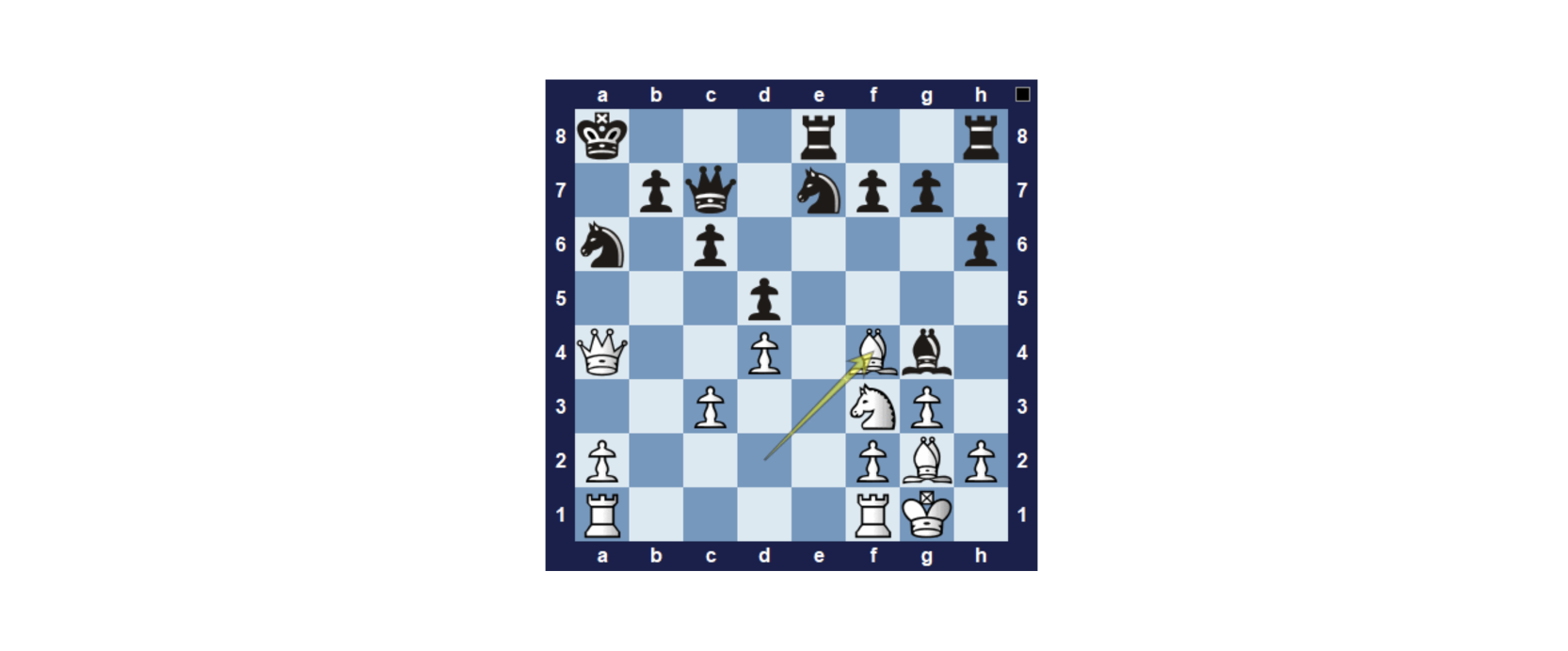
Mass is not about putting everything into one position. It is about concentrating your best resources on your highest-conviction ideas rather than spreading capital thinly across dozens of mediocre ones.
Warren Buffett has said it plainly: diversification is protection against ignorance. When you truly know what you own and why you own it, meaningful concentration is a feature, not a bug. At Jedburgh, we would rather own a focused portfolio of high-conviction positions than a bloated collection of lukewarm ones. If you attack everywhere, you attack nowhere.
4. Economy of Force
Allocate minimum essential combat power to secondary efforts.
Economy of Force is the companion to Mass and arguably the more underappreciated of the two. You cannot concentrate capital at the decisive point without accepting calculated risk elsewhere. That means sizing hedges appropriately rather than over-hedging, maintaining minimal exposure to lower-conviction positions, and resisting the urge to "diworsify."
Every dollar sitting in a mediocre position is a dollar unavailable for a great one. The discipline to hold less of what is merely adequate so you can hold more of what is exceptional is harder than it sounds, but it is central to portfolio construction.
5. Maneuver
Place the enemy in a position of disadvantage through the flexible application of combat power.
In markets, your true adversary is not a competing fund — it is your own behavioral biases and the complacency of consensus thinking. Market inefficiency is not the enemy; it is the opportunity. If markets were truly efficient, there would be no edge to find, no alpha to generate, and frankly, no reason for active management to exist.
Maneuver means dynamically adjusting your portfolio as conditions change: rotating sectors as macro regimes shift, adjusting net exposure as volatility rises, or repositioning into asymmetric opportunities as they emerge.
The key skill is recognizing when the terrain has changed. A strategy that works in a low-rate bull market will not work in a high-rate, risk-off environment. Great investors, like great commanders, maneuver. They are not married to a position; they are married to the process.

6. Unity of Command
Ensure unity of effort under one responsible commander.
In joint military operations, conflicting orders and unclear authority create friction — and friction gets people killed. In investing, the equivalent is an incoherent strategy: buying value stocks in one account while chasing momentum in another, or making decisions by committee without a clear decision-maker.
For individual investors, Unity of Command means a single, written investment philosophy that governs every decision. For teams and funds, it means unambiguous roles, a clear CIO, and a process that survives disagreement without becoming paralyzed by it. Internal debate on investment ideas should be encouraged. Rigorous discussion sharpens thinking, stress-tests assumptions, and surfaces the best ideas. But there is a meaningful difference between healthy debate and destructive internal conflict. When a team cannot reach a decision, when ego overrides process, or when greed and fear pull in opposite directions without resolution, the portfolio suffers. Unity of Command does not mean groupthink. It means that once the debate is done and the decision is made, everyone executes.
7. Security
Never permit the enemy to acquire an unexpected advantage.
In investing, security is risk management. It means protecting your portfolio from large, unexpected losses: the kind that, as we wrote in our Never Lose Money post, require disproportionate gains just to get back to flat. A -50% drawdown requires a +100% return to break even. That asymmetry is the most important math in investing.
Security includes position limits, stop-losses, hedging against correlated risk, and the psychological discipline to follow your process when emotions are telling you otherwise. It also means operational security — protecting your accounts, your research, and your edge. Security is not timidity. It is the foundation that enables boldness everywhere else.
8. Surprise
Strike the enemy at a time or place or in a manner for which he is unprepared.
Markets are reasonably efficient; genuine surprise is rare and hard-won. But it exists, and it rewards those with the patience and preparation to exploit it.
Surprise in investing means being contrarian when consensus is at an extreme. It means acting in special situations — spin-offs, post-bankruptcy equities, deeply out-of-favor sectors — where the crowd has stopped looking. It means deploying capital during liquidity crises when forced sellers create prices that have nothing to do with intrinsic value. The element of surprise belongs to the patient investor with dry powder and conviction, waiting for the moment the market is most unprepared for rational capital.
9. Simplicity
Prepare clear, uncomplicated plans and concise orders.
Complexity is the enemy of execution. The more complicated a strategy, the more ways it can break down under stress, when clear thinking is hardest and good judgment is most needed. The collapse of Long-Term Capital Management remains one of the most instructive case studies in financial history: extraordinary minds, extraordinary models, and an extraordinary failure rooted in complexity that obscured true risk.
Simple strategies are easier to execute, easier to stress-test, and easier to stick with when markets get difficult. That does not mean simplistic — it means purposeful. Know what you own. Know why you own it. Know what would change your mind. Write it down in plain language. If you cannot explain your investment thesis clearly and concisely, that is a warning sign worth heeding.
Our View
The 9 Principles of War were not designed for Wall Street. They were designed for the fog of battle — for environments of uncertainty, competition, incomplete information, and high stakes. Which is precisely why they translate so well.
At Jedburgh, these principles are embedded in how we think about portfolio construction, risk management, and decision-making. Objective becomes investment policy. Mass becomes position sizing. Security becomes risk management. The names change — the logic doesn't.
Markets reward the disciplined, the prepared, and the bold. At Jedburgh, we call this: Win at the Decisive Point.